

Could a tooth grow somewhere other than your mouth
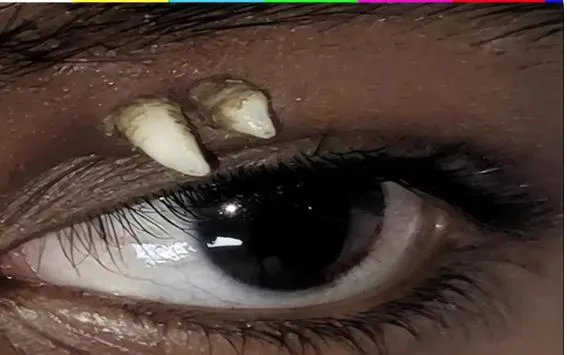 Could a tooth grow somewhere other than your mouth—even near your eye? A remarkable medical case published in 2026 has brought this rare dental phenomenon into the spotlight.
Most of us expect teeth to develop in the jaws and erupt into their proper positions. Occasionally, however, a tooth develops in an unexpected location. This condition, known as ectopic tooth development, can occur in several areas of the head and face.
In an extraordinary case reported by specialists at Aravind Eye Hospital in India, doctors discovered and removed a fully developed canine tooth from the upper eye socket of a 16-year-old boy. The case was published in the journal Ophthalmology in June 2026 and is believed to be the first reported instance of an ectopic tooth in the upper region of the eye socket, or superior orbit. It was not the first ectopic tooth ever found near an eye; previous cases have been documented in other orbital locations. Read the published case report.
The unusual discovery raises fascinating questions about how teeth develop, why they sometimes appear in the wrong place, and what these rare cases can teach us about dental and facial development.
What Happened in This Unusual Case?
The teenager sought medical attention after noticing painless swelling in his upper left eyelid. The swelling persisted, and two hard, whitish projections eventually became visible near the inner portion of the eyelid.
Because the growth was unusual, doctors considered several possibilities, including a foreign object or a rare growth that could contain different types of tissue.
A computed tomography (CT) scan revealed a structure with the recognizable shape of a tooth, including a crown and root, arising from the roof of the eye socket. Surgeons removed the structure, and examination confirmed that it was a mature canine tooth.
Importantly, the removed tooth did not show the tissue components associated with a teratoma, a type of tumor that can contain multiple tissue types. The doctors could not determine exactly why the tooth had developed in this location. Imaging also did not reveal any additional ectopic teeth. Source: Ophthalmology, 2026.
Although the case is exceptionally rare, it illustrates how the complex process of facial development can sometimes produce unexpected results.
What Exactly Is an Ectopic Tooth?
An ectopic tooth is a tooth that develops or erupts outside its normal position.
The term covers a range of situations. Some ectopic teeth remain within the mouth but emerge in the wrong position along the dental arch. Others develop entirely outside the usual arrangement of teeth.
Ectopic teeth can be ordinary primary or permanent teeth that have developed in an abnormal location. They can also be supernumerary teeth, meaning additional teeth beyond the normal number.
Depending on their location, ectopic teeth have been reported in the:
- Maxillary sinus, an air-filled space behind the cheekbone.
- Nasal cavity.
- Palate and other areas of the jaw.
- Chin and, in rare reports, the jaw joint.
- Eye socket and surrounding tissues.
A tooth found near the eye is particularly unusual because the orbit contains delicate structures, including the eyeball, muscles, nerves and blood vessels. Its exact position determines whether it poses a risk to nearby tissues.
How Can a Tooth Develop Outside the Mouth?
To understand ectopic teeth, it helps to understand how teeth form in the first place.
Tooth development begins before birth through a coordinated series of interactions between specialized cells and developing facial tissues. At the same time, the structures that form the jaws, nose and eye sockets are developing and joining together.
If these developmental processes do not follow their usual course, tooth tissue may develop in an abnormal position.
Researchers and clinicians have considered several possible explanations for ectopic teeth, including:
1. Developmental abnormalities
Changes during early facial development may cause a tooth to form outside its usual location. This is one possible explanation for teeth found in unusual areas of the skull.
2. Genetic factors
Some inherited conditions, including cleidocranial dysplasia, can affect the development and eruption of teeth and may be associated with additional or impacted teeth.
3. Trauma or local disturbances
In certain cases, injuries, previous dental procedures or other disturbances in the surrounding tissues have been proposed as contributing factors.
4. Associated cysts or growths
Some ectopic teeth are discovered in association with cysts or other lesions. This is why doctors must establish whether a structure is an isolated tooth or part of a more complex condition.
These possibilities do not explain every case. In the 2026 eye-socket case, the underlying cause remained unknown, and it would be inaccurate to attribute the finding to a particular injury, genetic condition or developmental event.
Are Ectopic Teeth Dangerous?
Not necessarily. The potential risks depend primarily on where the tooth is located, whether it is causing symptoms, and whether surrounding structures are affected.
Some ectopic teeth are discovered incidentally during imaging for another reason. Others may cause problems such as:
- Localized swelling or discomfort.
- Recurrent inflammation or infection.
- Obstruction of the nasal passages or sinuses.
- Pressure on nearby tissues.
- Formation of an associated cyst.
- Changes involving adjacent anatomical structures.
For example, a tooth in the nasal cavity may contribute to nasal blockage, discharge or nosebleeds. A tooth near the eye requires particular attention because of its proximity to important ocular structures.
However, the presence of an ectopic tooth does not automatically mean that a person will develop complications. Treatment decisions must be individualized according to clinical examination and imaging findings.
How Are Ectopic Teeth Diagnosed?
Diagnosis begins with a clinical examination and a review of symptoms and medical history.
Because an ectopic tooth may be located deep within the facial bones or in an unexpected anatomical space, imaging is often essential.
CT scanning can show the tooth’s shape, position and relationship to surrounding bone and other structures. Depending on the location, other imaging techniques may also be appropriate.
The diagnostic process must distinguish an ectopic tooth from other conditions that can produce a hard mass or unusual growth. These may include cysts, benign tumors, developmental lesions or foreign bodies.
In the reported eye-socket case, CT imaging helped identify the tooth before surgery, while examination of the removed structure confirmed the diagnosis.
Does an Ectopic Tooth Need to Be Removed?
The answer depends on the individual case.
Removal may be recommended when a tooth causes symptoms, contributes to infection, threatens nearby structures or is associated with a cyst or another concerning lesion.
When treatment is necessary, the surgical approach depends on the tooth’s location and accessibility. Some teeth in the nose or sinuses can be removed using endoscopic techniques, while teeth in other locations may require a different surgical approach.
For a tooth near the eye, careful planning is particularly important because of the surrounding anatomy. An appropriate specialist may be an oral and maxillofacial surgeon, an ophthalmic surgeon, an otolaryngologist or a multidisciplinary team, depending on the location.
Not every asymptomatic ectopic tooth requires immediate removal. In selected cases, monitoring may be appropriate after specialists assess the potential risks.
The 16-year-old patient in the 2026 report underwent surgical removal, and imaging did not identify any additional ectopic teeth.
Can an Ectopic Tooth Grow Back?
Removing an ectopic tooth does not ordinarily cause another tooth to develop in its place. However, rare reports describe additional or recurrent ectopic teeth, depending on the underlying condition and circumstances.
When multiple extra teeth are suspected, clinicians may recommend further assessment to determine whether other teeth are present and whether an underlying developmental or genetic condition needs consideration.
In the reported case, doctors found no other ectopic teeth on imaging and considered the likelihood of another to be low.
What Does This Mean for Dentistry and Periodontal Health?
Although this case is primarily an example of unusual dental and facial development, it highlights several important principles relevant to dental care.
First, not every dental structure develops where we expect it to. Dentists routinely evaluate tooth position and eruption, but rare cases remind clinicians to consider a broader range of possibilities when findings do not fit the usual pattern.
Second, accurate diagnosis matters. A hard swelling near the face or jaw should not automatically be assumed to be a routine dental problem. Appropriate examination and imaging help distinguish developmental abnormalities from cysts, tumors and other conditions.
Third, dental and medical specialists sometimes need to work together. The teeth, jaws, sinuses and eye sockets are anatomically close to one another. An abnormality in one area may require expertise from more than one specialty.
Finally, prevention has its limits. Good oral hygiene, professional dental examinations and appropriate periodontal maintenance are essential for controlling plaque, preventing common oral diseases and maintaining gum health. However, brushing, flossing or using an oral-care device cannot prevent a tooth from developing in an abnormal location during early development.
For patients, the practical lesson is to seek professional evaluation when an unexplained swelling or unusual structure appears rather than attempting to diagnose it independently.
The Takeaway: A Rare Reminder of How Complex Tooth Development Can Be
The discovery of a fully developed canine tooth in a teenager’s upper eye socket is an extraordinary example of the complexity of human development.
While ectopic teeth are uncommon, they have been documented in several locations outside the normal dental arch. The 2026 case stands out because of the tooth’s position in the upper orbit, an area where such a finding had not previously been reported in the medical literature to the authors’ knowledge.
For dental professionals, the case reinforces the importance of careful diagnosis, appropriate imaging and collaboration across specialties. For patients, it offers a reminder that unusual facial or dental findings deserve professional attention—even when they are painless.
Our understanding of oral health extends beyond the teeth we see in the mirror. The structures that form our teeth, jaws and face are closely interconnected, and rare cases like this one continue to teach medicine and dentistry something new.
Healthy teeth and gums begin with informed care, regular dental evaluations and attention to changes that deserve a closer look.
This article is for educational purposes only and is not a substitute for individualized dental or medical advice.
Comments are closed.