

Can Scientists Really Regrow Tooth Enamel? A Revolutionary Gel Could Change Dentistry
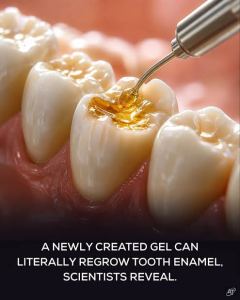 A New Era in Cavity Prevention? Breakthrough Gel Offers Hope for Restoring Tooth Enamel
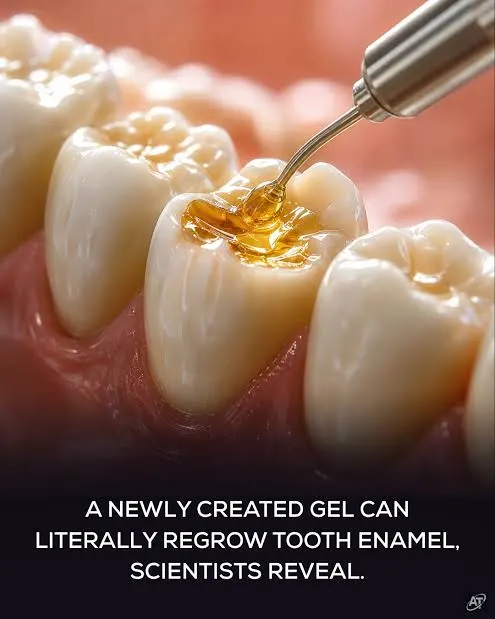
Tooth enamel is the hardest substance in the human body, yet once it is damaged or lost, the body cannot naturally regenerate it. This makes cavities, enamel erosion, and tooth sensitivity ongoing challenges in dental care. However, new scientific research is offering hope for a different approach: a specially developed gel designed to help rebuild and restore damaged tooth enamel.
Scientists Discover a Promising Way to Rebuild Tooth Enamel
Researchers at the University of Nottingham have developed an innovative, protein-based gel that may help restore damaged tooth enamel. The discovery could represent a major advancement in preventive and restorative dentistry, offering a potential alternative to treatments that simply protect or cover damaged tooth surfaces.
The technology is inspired by the natural process that forms enamel during early childhood. Scientists designed proteins that mimic the functions of the proteins responsible for organizing enamel development.
Once applied to a tooth, the gel creates a thin protective framework that fills microscopic cracks and imperfections. It then attracts calcium and phosphate minerals naturally present in saliva, encouraging them to form new mineral crystals that integrate with the existing enamel.
This process, known as epitaxial mineralization, allows the newly formed mineral layer to follow the organized structure of natural enamel.
Could This Gel Help With Tooth Sensitivity?
One particularly interesting application involves exposed dentin.
Dentin lies beneath the enamel and contains microscopic channels that communicate with the inner portion of the tooth. When dentin becomes exposed due to enamel erosion, gum recession, or other dental conditions, patients may experience sensitivity to hot, cold, sweet, and acidic foods.
Researchers found that the gel could encourage the formation of an enamel-like mineral coating over exposed dentin. This may eventually offer a new approach to managing dentin hypersensitivity while potentially improving the bonding of certain dental restorations.
How Strong Is the Regenerated Enamel?
An important question is whether newly regenerated enamel can withstand everyday activities.
The research team evaluated the material under laboratory conditions designed to simulate normal tooth use, including brushing, chewing, and exposure to acidic foods.
The results were encouraging. The regenerated mineralized tissue demonstrated mechanical properties comparable to healthy enamel, suggesting that the technology may offer more than a temporary protective coating.
However, laboratory findings do not necessarily predict long-term performance in patients. Further clinical research will be necessary to establish its effectiveness and durability in everyday dental practice.
Could This Replace Traditional Fillings?
Although the discovery is exciting, it is important to understand its limitations.
The gel may eventually help repair early enamel damage, strengthen weakened enamel, and address certain forms of erosion. However, it should not be considered a replacement for conventional cavity treatment.
Once tooth decay progresses into the deeper structures of a tooth, removing infected tissue and restoring the damaged area may still be necessary.
Traditional fluoride treatments also remain important because they help strengthen enamel and support remineralization during the early stages of tooth decay.
The new technology offers a potentially different approach by attempting to recreate the organized mineral structure of enamel rather than simply strengthening the remaining surface.
When Could This Technology Become Available?
The research was conducted by scientists at the University of Nottingham and published in the peer-reviewed journal Nature Communications in November 2025.
The researchers have begun commercial development through their startup company, Mintech-Bio, with the goal of introducing an initial dental product. However, further development, clinical validation, and regulatory review will be important before widespread patient use.
What Does This Mean for the Future of Dentistry?
For decades, dentistry has focused on preventing enamel loss, strengthening remaining tooth structure, and restoring damage with fillings, crowns, and other restorative materials.
The possibility of regenerating enamel represents an exciting shift in that approach.
If further studies confirm the initial findings, this technology could eventually provide dentists with another tool to address enamel erosion, tooth sensitivity, and early mineral damage.
The bigger question is no longer simply how to protect the enamel we have, but whether science will allow us to rebuild what has been lost.
For patients and dental professionals alike, this discovery offers an encouraging glimpse into the future of regenerative dentistry.
Scientific references:
-
Hasan A, et al. Biomimetic supramolecular protein matrix restores structure and properties of human dental enamel. Nature Communications (2025). Read the scientific publication.
-
-
 About the Author
Dr. Jin Eslami, DDS, MS, is a board-certified periodontist with over 30 years of experience in periodontal disease treatment, dental implants, and advanced bone regeneration. Based in Rancho Santa Margarita, she specializes in complex cases involving severe gum disease and full-arch implant rehabilitation. Dr. Eslami is a strong advocate for the connection between oral health and systemic conditions, including cardiovascular disease and cancer.To learn more or schedule a consultation, contact Dr. Eslami’s office for expert periodontal and implant care.
Orange County Oral Surgery & Periodontics
Phone: 949-888-0332
Website: https://www.ocosperio.com/
-

Comments are closed.